The CJD Foundation Grant
Contributed by: The Families of the CJD Foundation
Funds donated by supporters of the CJD Foundation have been applied to research grants awarded since 2009.

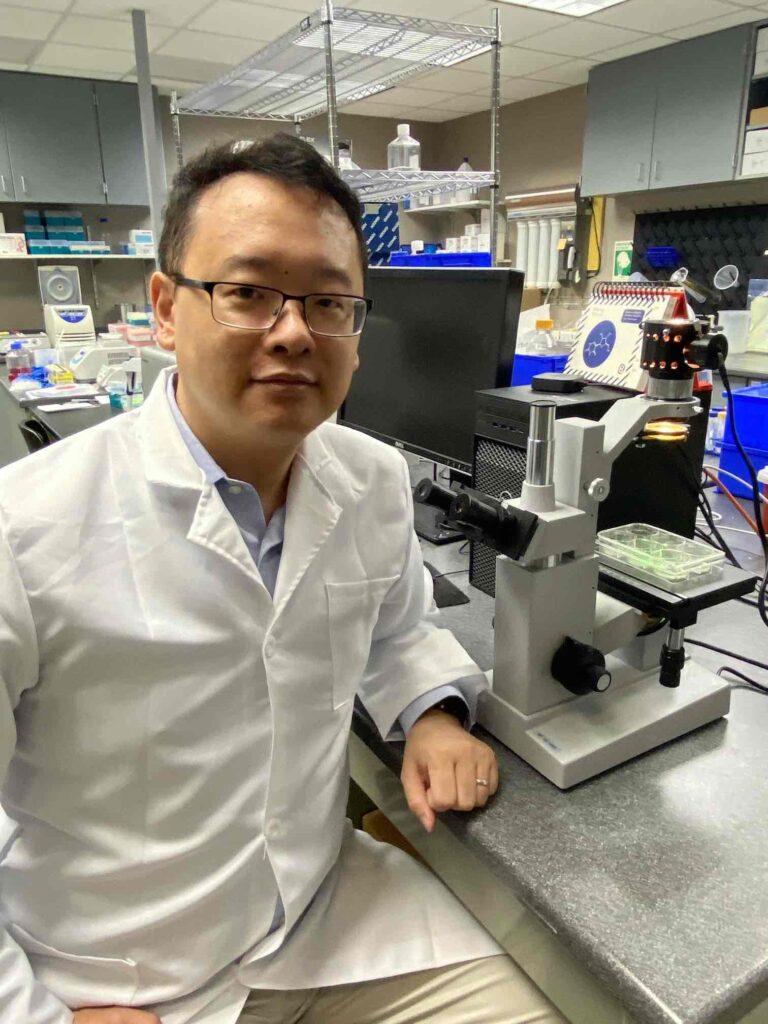
This project focuses on developing a new small-molecule therapy that lowers the level of prion protein by acting on its coding RNA. We use RNA splicing modulators, a class of compounds that change how cells process RNA before it is turned into protein. By activating a normally hidden segment in the prion protein RNA, these compounds cause the RNA message to be recognized as faulty and selectively destroyed, leading to a sustained reduction in new prion protein production. We have identified a lead compound, CP3, that lowers prion protein levels in human cells by about 70% and shows favorable drug-like properties. In mice, CP3 is orally administered, remains stable in the body, and reaches the brain at levels sufficient to be effective.
Previous studies show that even partial reductions in prion protein can meaningfully alter disease progression, highlighting the promise of this approach. We also found that combining CP3 with kinetin-derived splicing enhancers greatly increases its potency without detectable toxicity. In this study, we will determine optimal dosing strategies in mice expressing human prion protein, using prion protein reduction in the brain as the primary outcome. We will also define drug exposure and evaluate long-term safety, including unintended effects on RNA processing. Together, this work will advance a first-in-class, orally administered prion protein–lowering therapy toward clinical development.
Contributed by: The Families of the CJD Foundation
Funds donated by supporters of the CJD Foundation have been applied to research grants awarded since 2009.
Contributed by: The Families of the CJD Foundation
Funds raised by the annual Strides for CJD run/walk have been applied to research grants awarded since 2016.
Contributed by: Michael Vitanza
Established in 2022.
Contributed by: The Hunter Family and Byron Jones
This grant was established in 2019.
Contributed by: David Morris and Family
This grant was established in 2019.
Contributed by: Kristal Enter
This grant was established in 2026.
Contributed by: The Lewine Family
This grant was established in 2026.