The CJD Foundation Grant
Contributed by: The Families of the CJD Foundation
Funds donated by supporters of the CJD Foundation have been applied to research grants awarded since 2009.

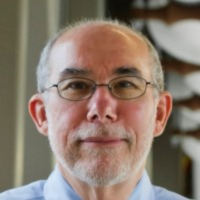
Expertise in prion diseases and Alzheimer’s disease.
My laboratory investigates the molecular and cellular mechanisms underlying two classes of human neurodegenerative disorders: prion diseases and Alzheimer’s disease. Alzheimer’s disease afflicts 5 million people in the U.S., a number that will increase dramatically as the population ages. Prion diseases are much rarer, but are of great public health concern because of the global emergence of bovine spongiform encephalopathy (“mad cow disease”), and its likely transmission to human beings. Moreover, prions exemplify a novel mechanism of biological information transfer based on self-propagating changes in protein conformation, rather than on inheritance of nucleic acid sequence. Prion and Alzheimer’s diseases are part of a larger group of neurodegenerative disorders, including Parkinson’s, Huntington’s and several other diseases, which are due to protein misfolding and aggregation. A prion-like process may be responsible for the spread of brain pathology in several of these disorders, and there is evidence that the prion protein itself may serve as a cell-surface receptor mediating the neurotoxic effects of multiple kinds of misfolded protein. Thus, our work on prion and Alzheimer’s diseases will likely provide important insights into a number of other chronic, neurodegenerative disorders.
Our work has several broad objectives. First, we wish to understand how the cellular form of the prion protein (PrPC) is converted into the infectious form (PrPSc). To address this question, we have investigated the cellular localization and trafficking of both PrPC and PrPSc, the nature of their association with cell membranes, as well as the molecular features of the conversion process itself. Second, we want to understand how prions and other misfolded protein aggregates cause neurodegeneration, neuronal death and synaptic dysfunction. In this regard, we seek to identify what molecular forms of PrP and the Alzheimer’s Aß peptide represent the proximate neurotoxic species, and what receptors and cellular pathways they activate that lead to pathology. Third, we aim to use our knowledge of the cell biology of prion and Alzheimer’s diseases to develop drug molecules for treatment of these disorders.
We utilize a range of experimental systems and models, including transgenic mice, cultured mammalian cells, yeast (S. cerevisiae), and in vitro systems. We employ a wide variety of techniques, including protein chemistry, light and electron microscopy, mouse transgenetics, high-throughput screening, neuropathological analysis, biophysical techniques (surface plasmon resonance, NMR, X-ray crystallography), electrophysiology (patch-clamping), medicinal chemistry, and drug discovery approaches.
Contributed by: The Families of the CJD Foundation
Funds donated by supporters of the CJD Foundation have been applied to research grants awarded since 2009.
Contributed by: The Families of the CJD Foundation
Funds raised by the annual Strides for CJD run/walk have been applied to research grants awarded since 2016.
Contributed by:
Ernie’s Gift 4 CJD Foundation
Established in 2017.
Contributed by: The Glavan and Gallagher families
Established in 2022.
Contributed by: Michael Vitanza
Established in 2022.
Contributed by: The Highman and Nugent Families
This grant was established in 2020.
Contributed by: The Snively Family
This grant was established in 2015.
Back to List of Grants Research Grants Supported Back to list Memorial Grants
Contributed by: The Dubin Family
This grant was established in 2026.